Iris Krüger · 26 October 2026
Urban Green Corridors and Student Commutes: Mapping Park Access Against Stress Biomarker Shifts
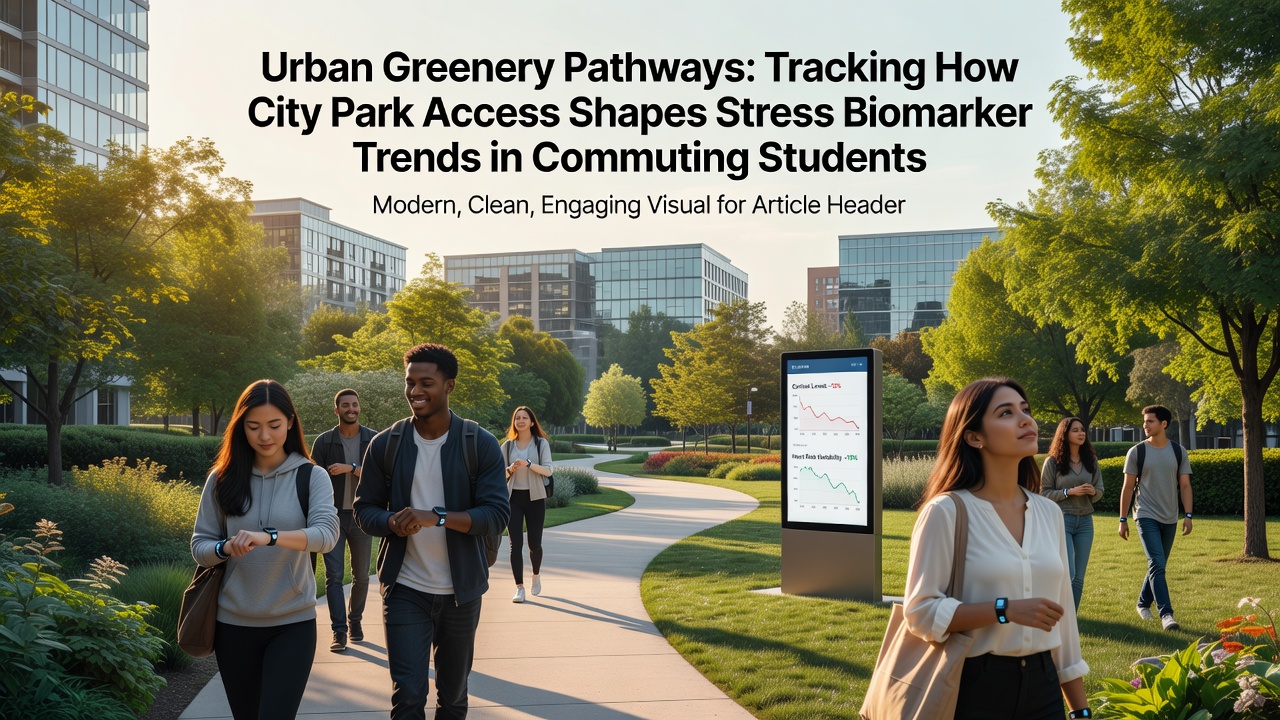
Urban planners and public health researchers track how daily exposure to city parks alters physiological stress responses in students who travel between home and campus each day. Data collected from wearable sensors and saliva assays reveal measurable changes in cortisol levels, heart rate variability, and inflammatory markers when routes pass through or near green spaces rather than dense traffic corridors.
Commuting Patterns and Biomarker Measurement
Students in major metropolitan areas often cover several kilometers on foot, by bicycle, or via public transit before classes begin. Researchers equip participants with continuous monitoring devices that sample biomarkers at set intervals throughout the morning journey. These devices capture baseline values at departure, mid-route fluctuations, and arrival readings on campus, allowing direct comparison between segments that include park access and those that do not.
Studies conducted across North American and European cities show that students whose paths intersect parks for at least eight minutes display lower average cortisol concentrations upon arrival compared with peers whose routes remain entirely on paved streets. Heart rate variability improves during green-space segments, indicating reduced sympathetic activation while individuals move through tree-covered areas.
Geographic Distribution of Green Access
City layouts determine how readily students encounter vegetation during commutes. In Toronto, municipal mapping identifies linear parks that align with popular student corridors near universities, whereas in Melbourne, planners document gaps where rail lines and arterial roads create barriers between residential zones and campuses. Data from the Australian Institute of Health and Welfare indicate that neighborhoods with higher tree canopy coverage correlate with shorter durations of elevated stress biomarkers among young adults traveling to educational institutions.
European Environment Agency reports similarly document regional differences, noting that Scandinavian cities maintain higher percentages of accessible green corridors along transit lines than many southern European urban centers. These variations produce observable differences in biomarker trends collected from student cohorts across the two regions.
October 2026 Monitoring Expansions
In October 2026, several university consortia launched expanded sensor networks along established student routes in Chicago and Berlin. The networks integrate air-quality readings with biomarker sampling to isolate the contribution of vegetation density from other environmental factors such as noise and particulate matter. Preliminary figures released by participating institutions show consistent reductions in salivary alpha-amylase, a marker of acute stress, among participants who traverse park segments during morning hours.
Route Design Elements That Influence Outcomes
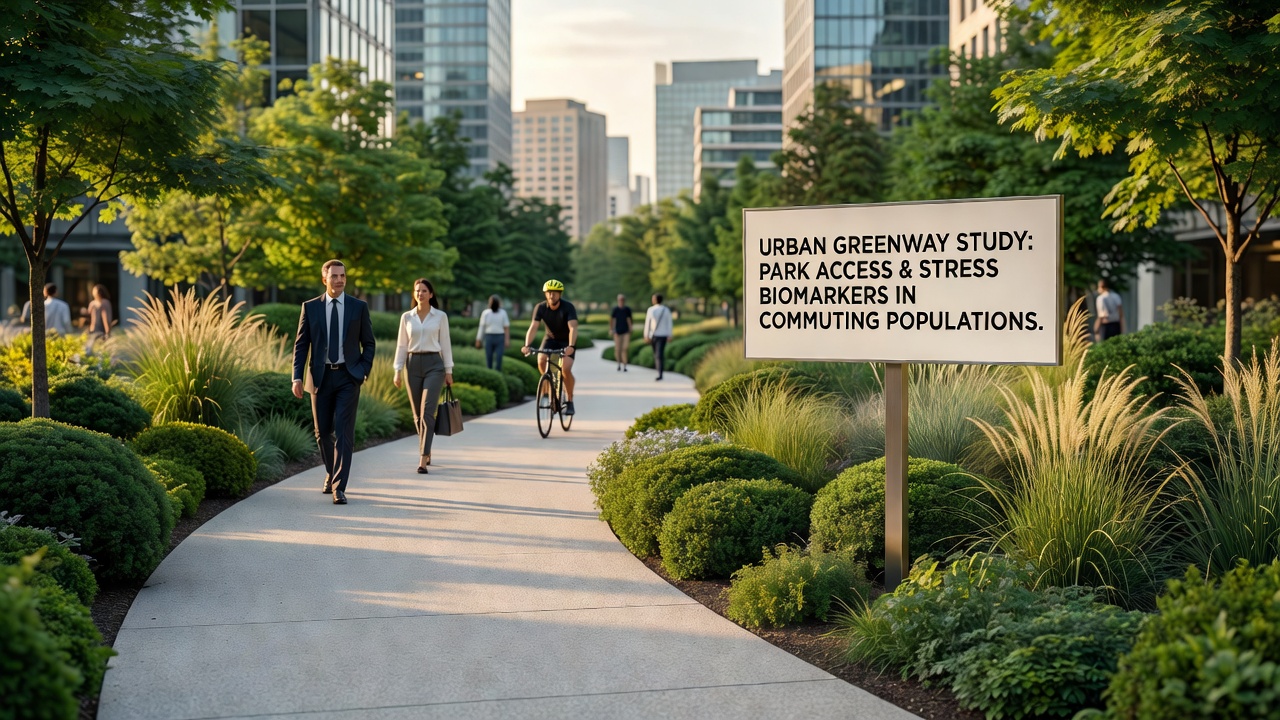
Path width, tree density, and water features each receive attention in route analyses. Wider pathways that allow separation from vehicle traffic produce larger biomarker improvements than narrow strips squeezed between buildings and roads. Researchers note that students who detour slightly to include a park segment often maintain lower stress readings for the remainder of the day, even after exiting the green area.
Longitudinal tracking reveals that repeated exposure over a semester strengthens these patterns. Students who consistently choose green routes show smaller spikes in inflammatory markers during exam periods compared with those who maintain direct but less vegetated paths. These trends appear across multiple institutions regardless of climate zone or transit infrastructure type.
Integration With Broader Urban Planning Data
Public health agencies compile commute maps with park inventories to identify priority zones for new greenery investments. The Centers for Disease Control and Prevention in the United States links such datasets to student health records, revealing associations between park proximity and reduced utilization of campus counseling services during high-stress academic periods. Canadian researchers at the University of British Columbia apply similar methods, confirming that biomarker stabilization occurs most reliably when green exposure exceeds a threshold duration of six to ten minutes per commute.
Conclusion
Continued collection of biomarker data along student commute routes supplies urban planners with quantitative evidence for expanding green corridors. Cities that adjust infrastructure to increase park access during peak student travel times record measurable shifts in physiological stress indicators. Ongoing projects scheduled through late 2026 aim to refine route optimization models that balance distance, safety, and vegetation exposure for commuting populations.