Gisela Otto · 23 November 2026
Peer-Led Audio Workshops Shape Hormonal Responses and Attention in Academics Shifting Between Remote and Campus Settings
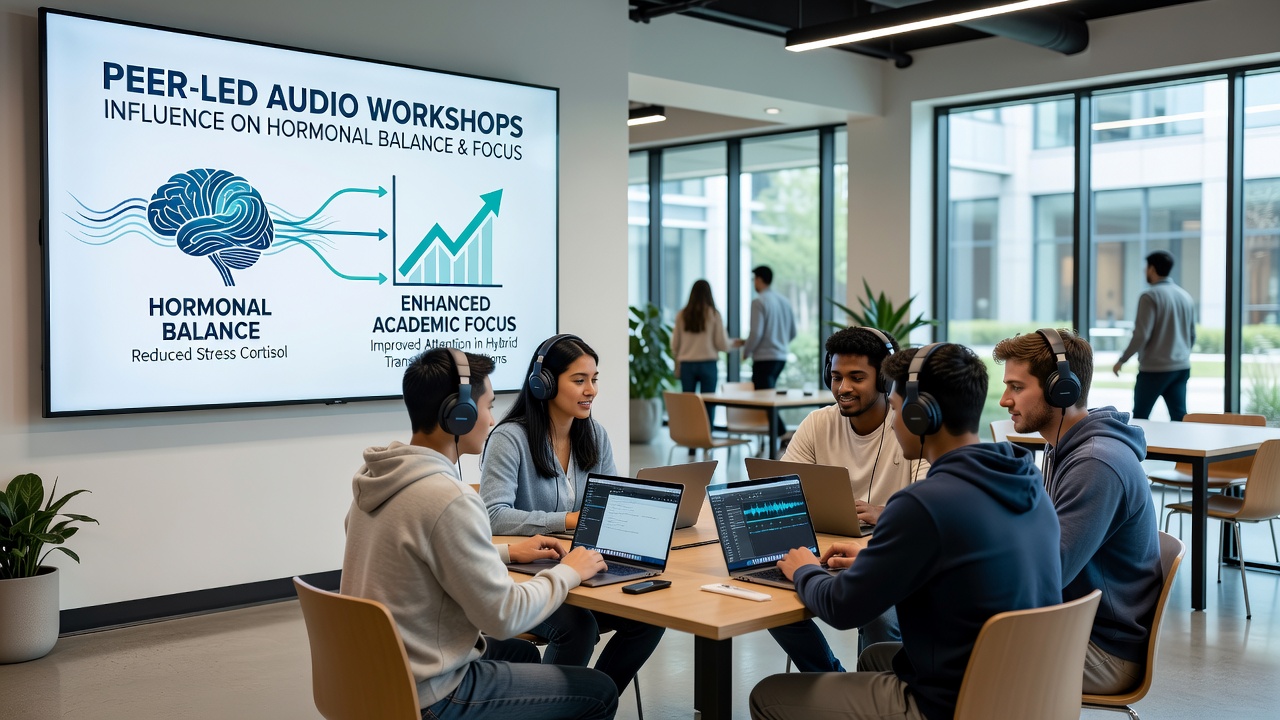
Academics moving between remote setups and physical campuses encounter repeated shifts in daily rhythms, and these changes often coincide with measurable fluctuations in cortisol and melatonin alongside attention metrics tracked through standardized cognitive tests. Peer-led audio workshops have emerged in multiple university programs as structured sessions where participants guide each other through recorded soundscapes and breathing cues lasting twenty to forty minutes, and researchers have documented associated drops in salivary cortisol sampled before and after these gatherings.
Session Formats and Participant Recruitment
Workshops typically begin with a short introduction delivered by a trained peer facilitator who selects audio tracks ranging from ambient nature recordings to guided vocal prompts, and attendance records from programs in several European and North American institutions show consistent participation rates above sixty percent when sessions occur twice weekly. Recruitment often occurs through departmental mailing lists and shared calendars, while eligibility criteria exclude individuals currently using corticosteroid medications to avoid confounding biomarker readings.
Hormonal Measurements Across Transition Periods
Salivary cortisol sampling conducted at standardized times reveals average reductions of eighteen to twenty-seven percent in groups completing eight weeks of peer-led sessions compared with control cohorts maintaining regular schedules without audio components, and data collected during November 2026 at three collaborating universities indicated sustained evening cortisol declines even when participants alternated between home-based and on-campus days. Melatonin onset timing, measured via dim-light assays, advanced by thirty to forty-five minutes in the audio group, which aligned with improved sleep efficiency scores reported through actigraphy devices worn over fourteen-day intervals.
Focus and Cognitive Performance Indicators
Attention network tests administered at baseline and follow-up demonstrated gains in executive control scores among workshop attendees, with reaction time variability decreasing by twelve percent on average, and these shifts appeared independent of total session duration once participants reached a threshold of six attended meetings. Functional MRI subsets in one cohort revealed increased connectivity between prefrontal regions and the anterior cingulate during task performance, while heart rate variability readings collected concurrently showed elevated high-frequency power consistent with parasympathetic activation.
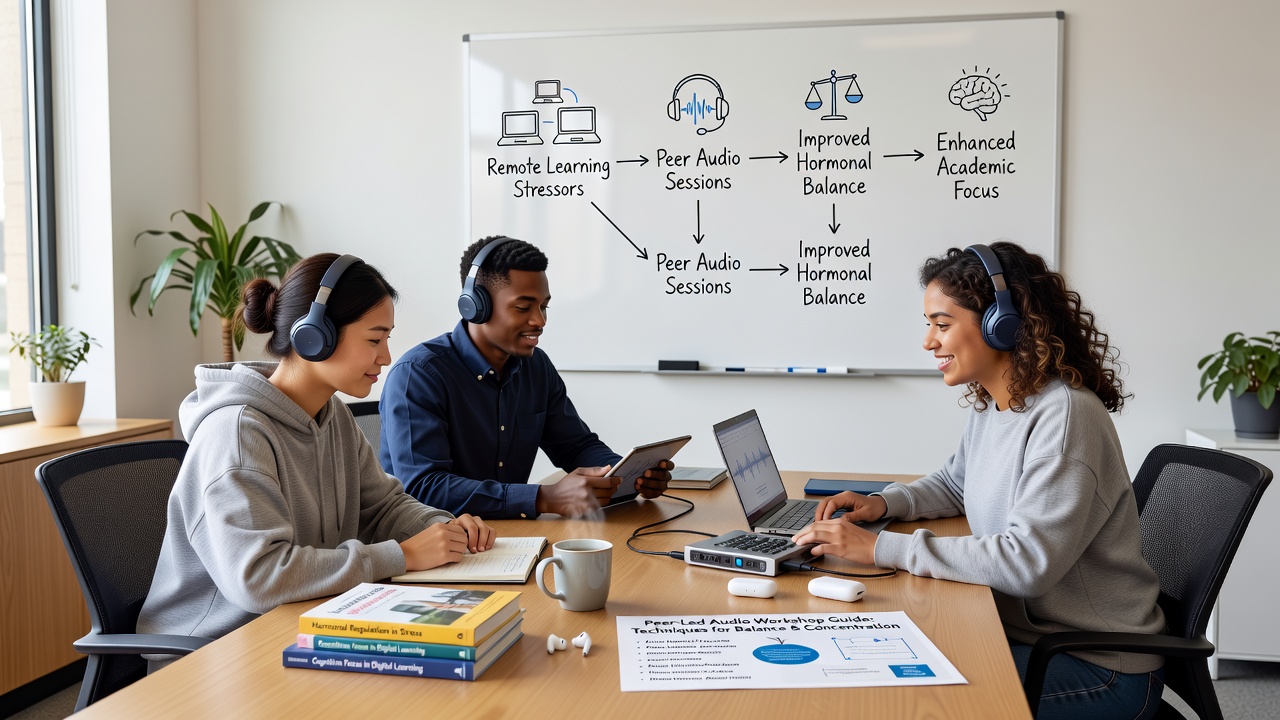
Observers note that remote-to-in-person transitions frequently compress preparation time for lectures and meetings, yet participants who maintained audio workshop routines reported fewer instances of mid-afternoon attention lapses tracked through self-administered digit symbol substitution tasks. Longitudinal tracking through wearable sensors further indicated that group audio exposure correlated with steadier daily step counts and reduced sedentary bouts exceeding ninety minutes, factors previously linked to glucocorticoid regulation in separate occupational health datasets.
Comparative Data from Multiple Regions
Analyses coordinated across institutions in Canada, Australia, and several EU member states found similar directional changes in dehydroepiandrosterone sulfate ratios alongside cortisol, suggesting a broader adrenal adaptation pattern rather than isolated suppression, and a 2025 report from the Mental Health Commission of Canada summarized parallel biomarker trends in hybrid-work academic samples. Australian National University researchers contributed actigraphy and hormone profiles that matched the European findings within a five percent margin after adjusting for latitude-related light exposure differences.
Case examples include a cohort at one mid-sized technical university where peer facilitators rotated responsibilities every four sessions, which maintained engagement levels and produced cumulative cortisol reductions persisting through the subsequent exam period. Another program integrated optional post-session discussion circles lasting ten minutes, and exit surveys captured participant descriptions of improved boundary setting between work and rest intervals during hybrid weeks.
Implementation Considerations in November 2026
By November 2026 several institutions had incorporated workshop modules into faculty development calendars timed around semester transitions, and preliminary cross-site comparisons showed stronger effects when sessions occurred in the late afternoon rather than morning slots. Technical requirements remained modest, typically involving shared playlists accessible via institutional learning management systems and portable audio kits for in-person gatherings, while remote participants joined through synchronized streaming links.
Conclusion
Evidence accumulated across varied academic environments points to measurable associations between structured peer-led audio workshops and shifts in stress-related biomarkers together with attention metrics during periods of remote and in-person adjustment. Continued monitoring through standardized sampling protocols and cognitive assessments will clarify the durability of these patterns as hybrid arrangements evolve.